
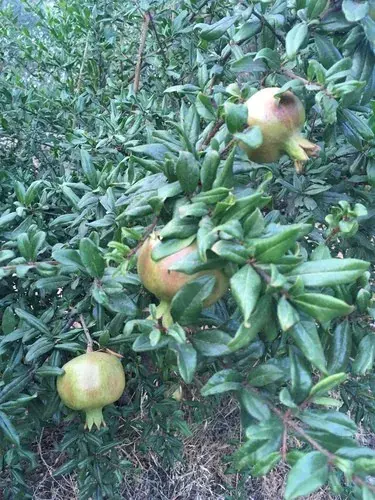
Pomegranate
Crimson flowers in summer, fruit in autumn, on a tree that takes both heat and cold.
- Scientific name: Punica granatum
- Family: Loosestrife family
Pomegranate is one of the few plants that earns its place twice over: once for its scarlet summer flowers and again for its autumn fruit. It tolerates a wide range, roughly 5 to 38 °C, which suits regions that turn genuinely cold in winter and fiercely hot in summer.
At a glance
- Plant typeTree or shrub
- WateringEvery 1–2 weeks
- LightFull sun
- Comfortable range5 – 38 °C
- Height1.8 – 6 m
- Spread1.2 – 4.5 m
- FloweringSummer
- HarvestSummer and autumn
Care guide
Watering
Even moisture every one to two weeks, letting the top layer dry. Cut back after harvest and as the cold arrives. Consistency matters here: sharp swings in watering are the direct cause of fruit splitting before it ripens.
Light and heat
Full sun. It handles winter cold in the centre and north of the Kingdom as readily as it handles summer heat — few fruit trees span that range as comfortably.
Soil and feeding
Ordinary free-draining garden soil. Use a potassium-rich feed fortnightly in spring, moving to quarterly in autumn, and taper off in winter.
Pruning
Prune in late winter to open the tree to light and air and relieve crowding. Regular light pruning lifts the crop; a hard cut costs you a full season of fruit.
Propagation
Grafting and layering in spring and winter. It takes some patience — new budding growth is the sign it has taken.
In Saudi conditions
The best results in the Kingdom come from areas with a genuinely cool winter, such as Al-Qassim and the north, where the fruit sizes up better and colours more deeply than in places that stay warm year-round.
Common problems
- Fruit splitting before ripeness — irrigation swings, not a disease
- Scale insects on the inner branches
- Yellowing and leaf fall in winter, which is normal — the tree is deciduous
- Fruit rot where humidity is high and the canopy is poorly ventilated
Need a hand?
Winter pruning and setting an irrigation schedule that prevents fruit split are routine work for our farmers.
Similar plants
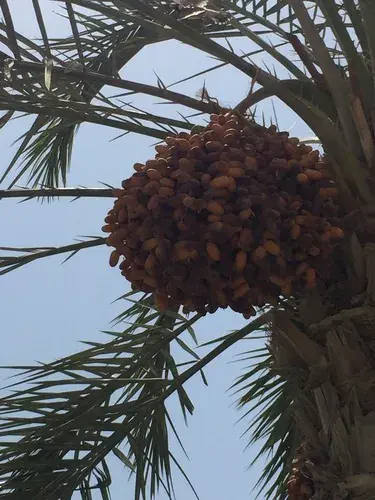
Date palm
Phoenix dactylifera
Saudi Arabia's signature tree: heat-hardy, salt-tolerant, productive for decades.
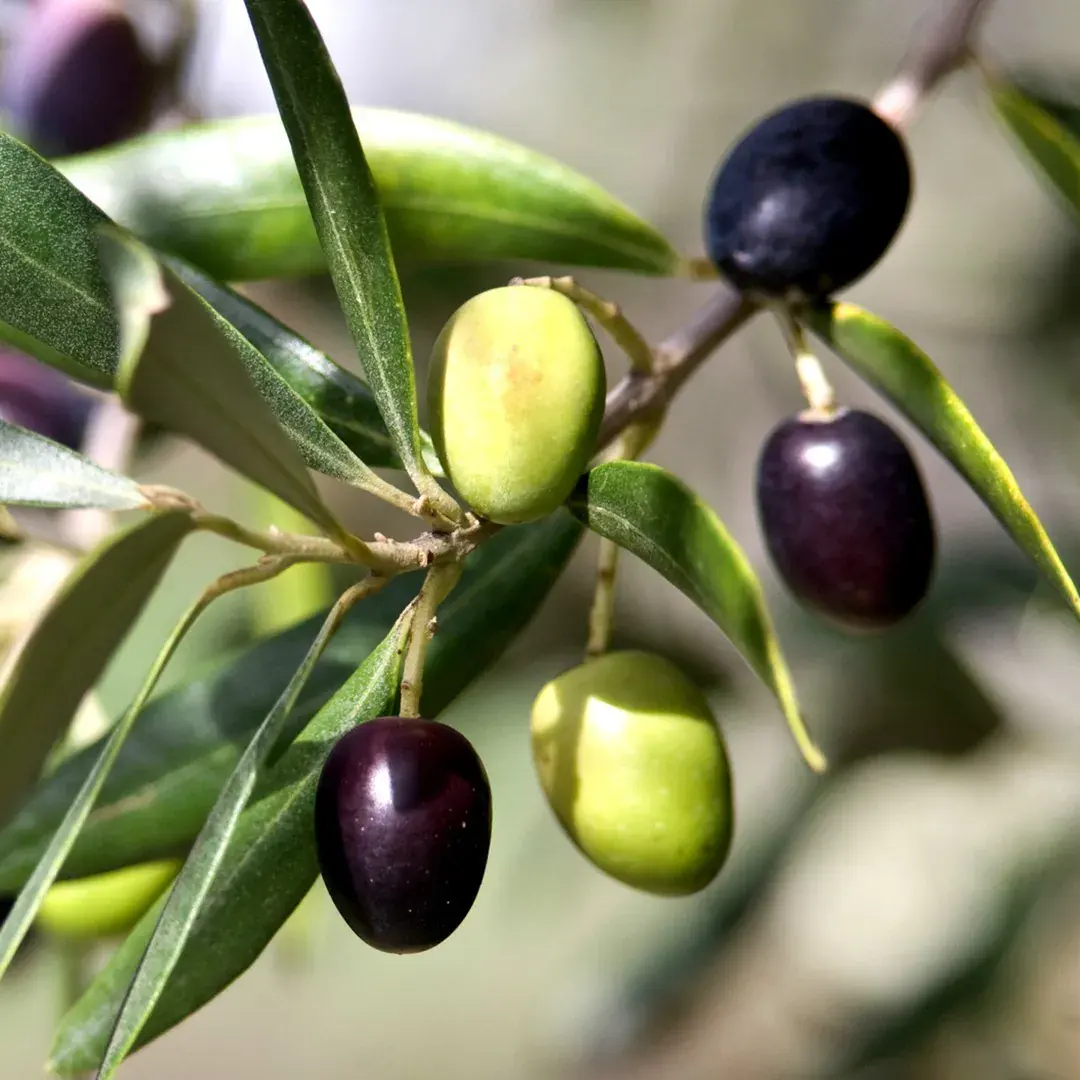
Olive
Olea europaea
A long-lived, silver-leaved tree that shrugs off drought — as a hedge or a specimen.
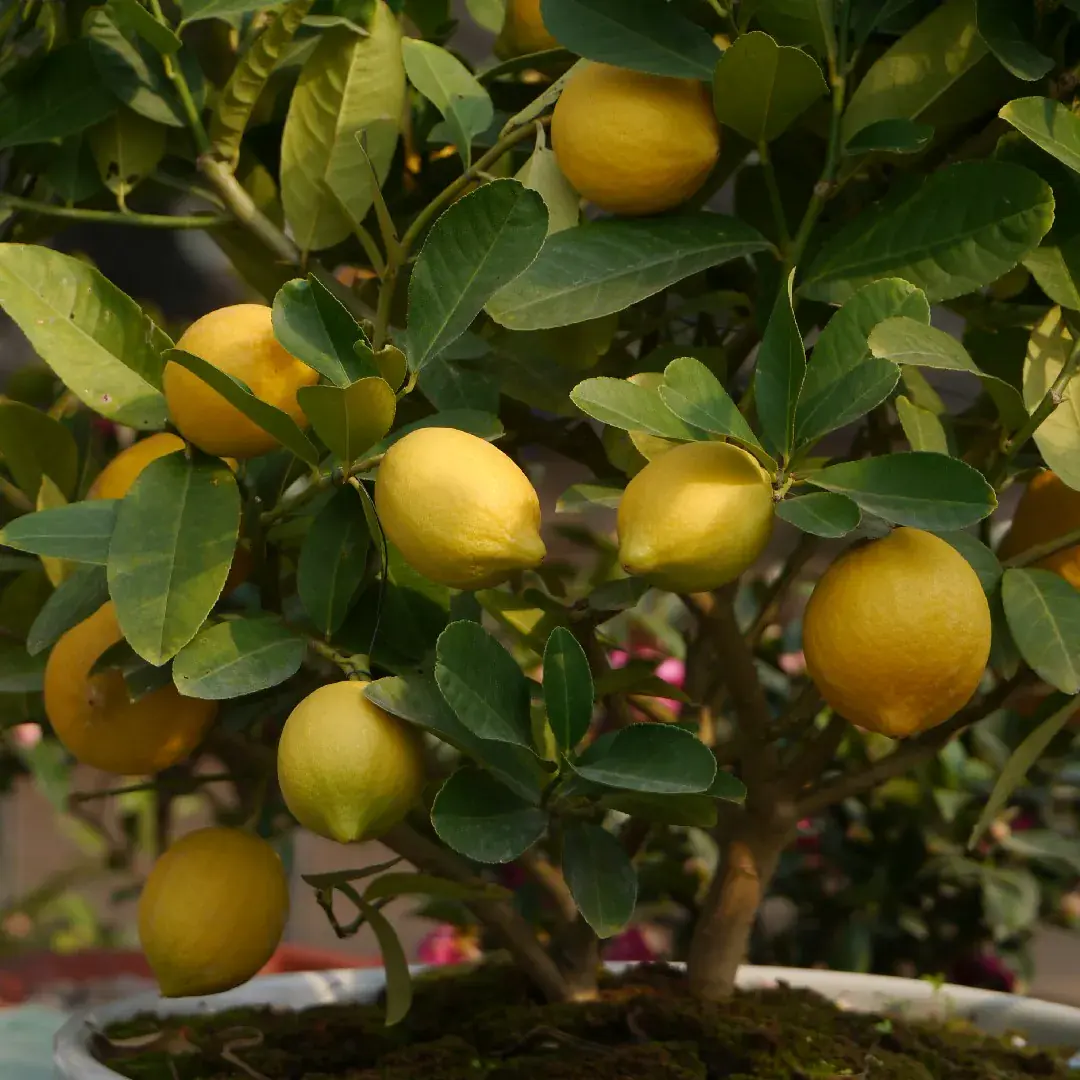
Lemon
Citrus limon
The most requested citrus for home gardens: compact, fragrant, productive most of the year.
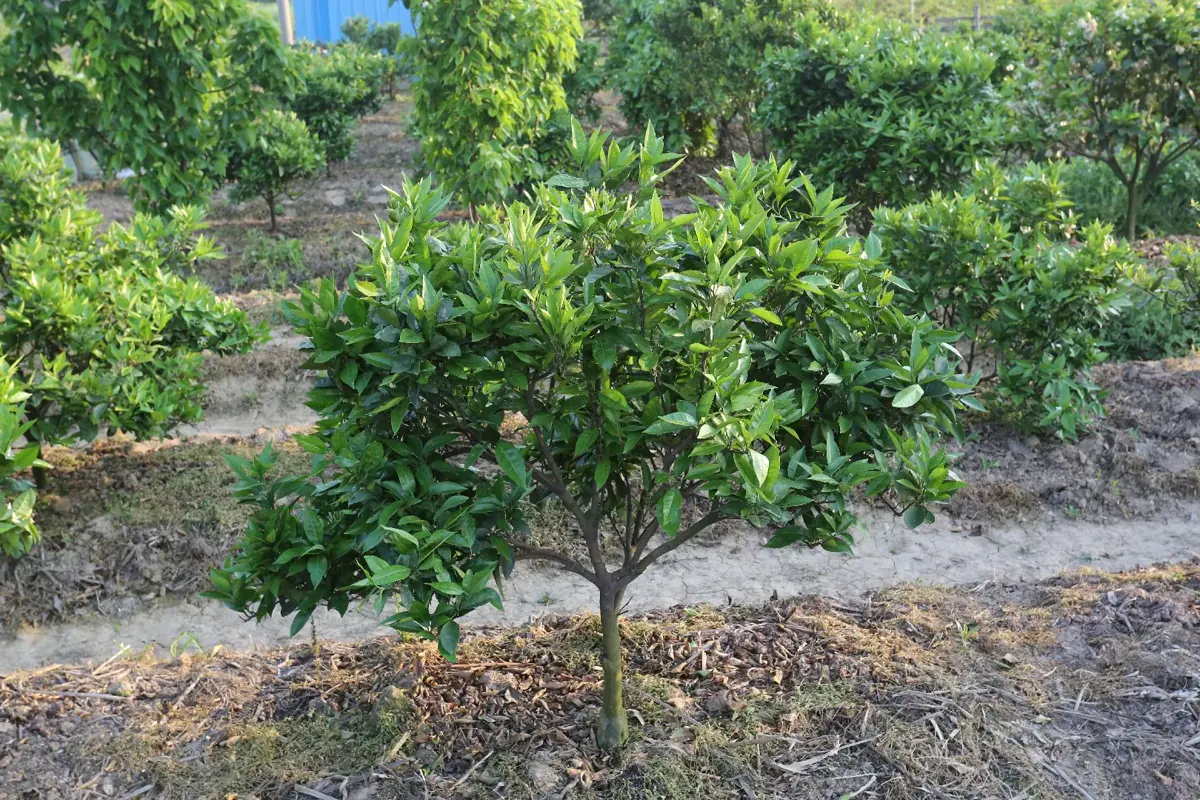
Mandarin
Citrus reticulata
Small, easy-peel citrus on a tree that fits a narrow courtyard.